Destinations
London on a supervised trip: what a student actually sees
Five or seven days, a small group, the landmarks in the morning while they are quiet — and the three famous things we deliberately do not do.
Roseworth International School
· 5 min read
On this page — 6 sections
London is the city every family names first and the one a school has to be most careful with. It is enormous, it is expensive, and the version of it a tourist gets in three days is not the version a fifteen-year-old on a supervised trip needs. So this is what our London trips actually do, and why.
The short answer: five or seven days, a small group, a named member of staff at every point, the landmarks in the morning while they are quiet, and the parts of the city that reward a walk rather than a queue.
The landmarks, done properly
There are about six things in London that a student will regret not seeing, and they are not the six a top-ten list gives you.
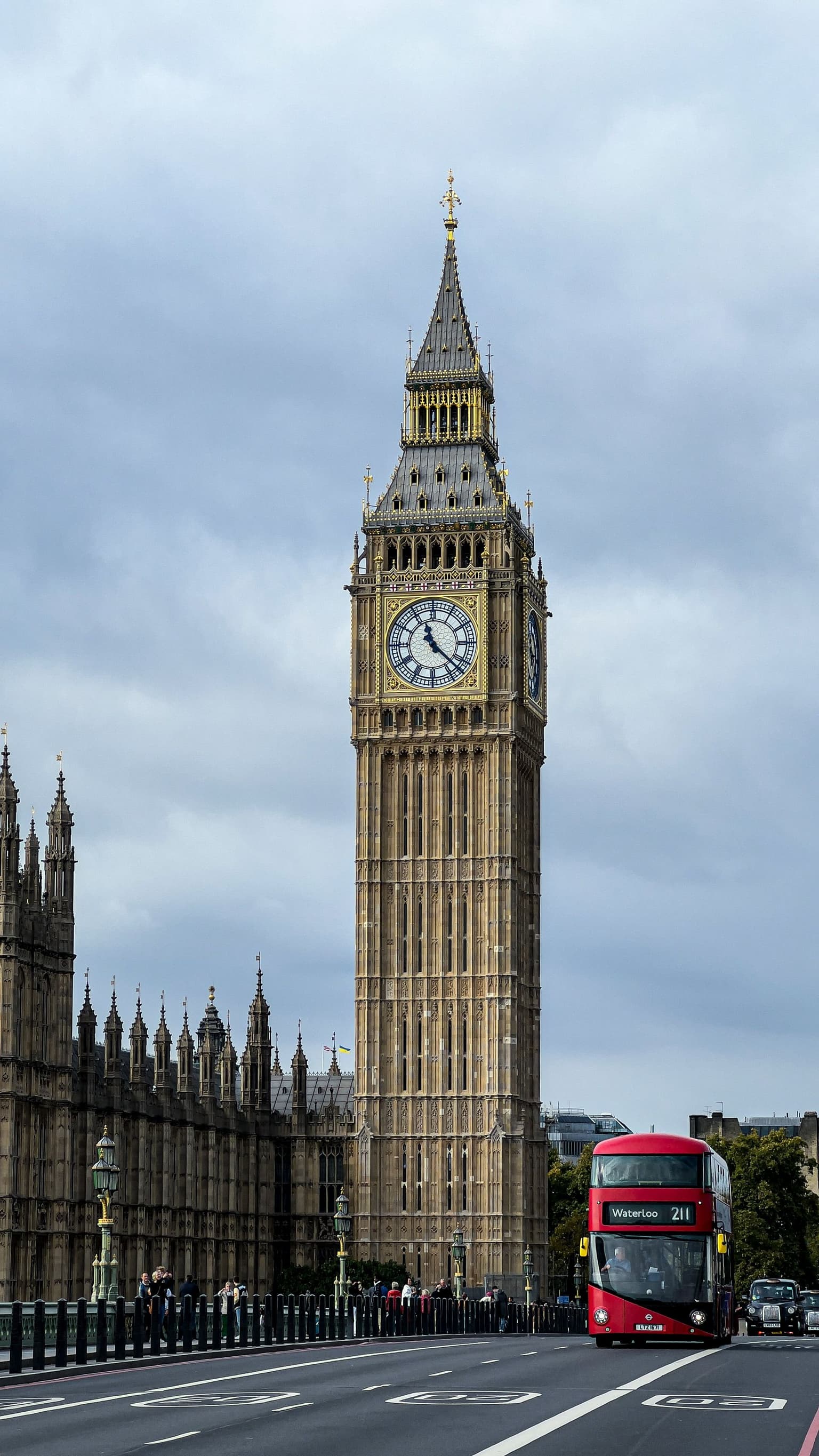
Westminster and the river. The Palace of Westminster, Big Ben — the tower is Elizabeth Tower; the bell is Big Ben, and a student who knows that is ahead of most adults — Westminster Abbey, and the walk across the bridge for the view back. We do this early. By eleven the pavement outside Westminster is a crowd; at half past nine it is a city going to work, which is a more interesting thing to see.
The Tower of London. Nine hundred years old, a working fortress for most of them, and the only place in this guide where the queue is worth it. The Crown Jewels take twenty minutes and the ravens take five, but the White Tower is where a student who thinks history is a school subject changes their mind.
The British Museum. Free, vast, and impossible in one visit — which is why we do not try. Two galleries, chosen before we go, and out again while everybody is still interested. The Rosetta Stone and the Egyptian rooms for a first visit; the Sutton Hoo helmet if the group has done Anglo-Saxons at school.
Covent Garden and the South Bank. The two parts of central London that are genuinely pleasant to walk, with street performers, market stalls and the river. This is where a group stops being a group being marched around and starts being teenagers in a city.
Greenwich, if the trip is seven days. A boat down the Thames, the Royal Observatory, and standing on the Prime Meridian with one foot in each hemisphere. The boat is the point: London makes sense from the water in a way it does not from a coach window.
A West End show, on the longer courses and as an optional extra on the shorter one. For a student learning English, two hours of live theatre does something no classroom does — and a musical is the right choice, because the songs carry the meaning when the dialogue moves too fast.
What we deliberately do not do
The London Eye, usually. It is thirty minutes of queueing for thirty minutes of rotation, and the view from the Tate Modern's tenth-floor terrace is free, less crowded and arguably better. If a group asks for it we book it; we do not build a day around it.
Oxford Street. A group of fifteen teenagers on Oxford Street on a Saturday is a supervision problem with no educational return. Shopping happens at Covent Garden, where the group can be in sight.
Madame Tussauds. Expensive, and about photographs rather than London.
How a London day is supervised
Differently from Newcastle, and it is worth being explicit about why. London is a city where a lost student is a serious problem rather than a ten-minute one, so:
- Group sizes are smaller on London trips than on our city-based courses.
- Travel is by pre-booked coach or by Underground as a group, never in twos.
- Every student carries an Oyster or contactless card, the address of the accommodation, and the twenty-four-hour number on paper as well as in their phone.
- There is a stated meeting point at every stop, and the group is counted on arrival and departure. Every time.
- Free time in central London is short, bounded to a named area, and in threes with a return time — and only for students of fifteen and over.
The general rules are set out hour by hour in how supervised is a study holiday. London is the course where we hold to them most tightly.
Where students stay
On the London cultural trips, accommodation is a residence or a hotel rather than host families — the distances make a family placement impractical, and a group that is together in the evening is easier to keep safe in a city this size. That is a real trade: students get less English practice at dinner than they would in Newcastle. It is one of the reasons we describe London as a cultural trip rather than a study holiday.
If the priority is spoken English rather than the sights, host family or student residence explains why a family in a smaller city does more for a learner, and the Newcastle guide describes what that fortnight looks like.
Five days or seven?
The five-day trip covers Westminster, the Tower, the British Museum, Covent Garden and the South Bank, at a pace that leaves students tired but not exhausted. It suits a school group with a fixed half-term week, and it suits a first visit.
The seven-day trip adds Greenwich by boat, a second museum, a theatre evening and — importantly — one slower day. Seven days in London without a slower day is how a trip stops being enjoyable around Thursday.
Both are on the London destination page with their dates, and each course page carries its real day-by-day itinerary rather than a description of one.
Is London right for your child?
It is right for a student who already has some English and wants the city — the history, the theatre, the museums. It is right for a school group travelling with their own teachers.
It is less right for a first trip abroad alone, for a student under about thirteen, or for a family whose goal is spoken English above everything. London gives you the world's best museums and less conversation practice; a smaller city gives you the opposite. Neither is better, and we would rather tell you that than sell you the more famous one.
Tell us your child's age and the weeks you have free on the contact page, and we will tell you which of the two London trips fits — or whether it should be somewhere else.