Before you travel
Host family or student residence?
The two ways our students live, what each one is actually like, and the questions to ask yourself about a quiet fifteen-year-old rather than a confident one.
Roseworth International School
· 5 min read
On this page — 6 sections
Almost every family asks us this, and almost every family asks it in the same order: which is safer, which is better for their English, and which will their child actually enjoy. The answers are, in short: both are safe and checked in different ways, the host family usually does more for spoken English, and which one a child enjoys depends on the child rather than the option.
Here is what each is really like.
A host family
A student has their own bedroom in a family home, usually within a short bus ride or walk of the school. Breakfast and dinner are with the family; lunch is packed and eaten with the group. There may be another student in the house, and if there is, we do not place two who share a first language — the point is somewhat defeated by a housemate you can speak Spanish to.
What surprises parents is how much of the value is at the dinner table. A classroom gives a student thirty minutes of speaking in a four-hour morning; a family gives them an hour of it every evening, with nobody marking them and no option to be quiet. Students who arrive nervous about speaking almost always improve faster in a family than in a residence.
What also surprises parents is that the house will not look like a hotel. It is somebody's home, in an ordinary British street, with their furniture and their routine and possibly their dog. Families are chosen for warmth and experience rather than square footage.
How they are checked. Every household is visited in person before a student is placed. The adults hold current DBS certificates, the bedroom and the bathroom are inspected, references are taken, and the household is re-visited. A placement that is not working is changed — not negotiated, changed — and that has happened; it is rare, and it is the reason we keep more approved families than we need in each city.
A student residence
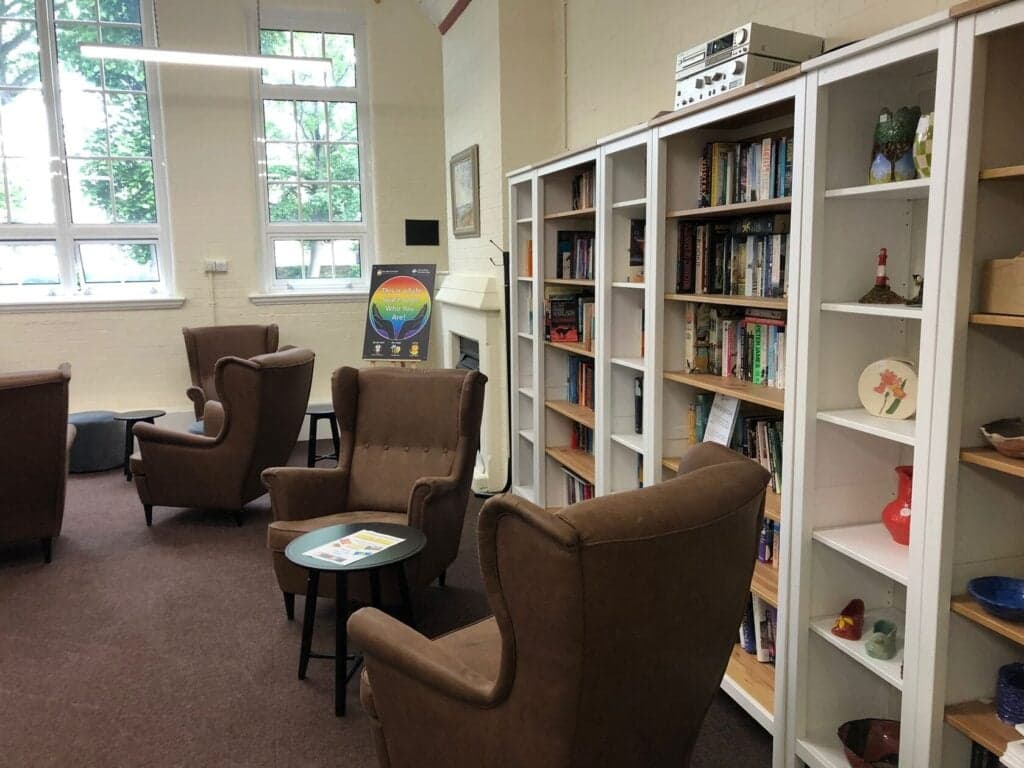
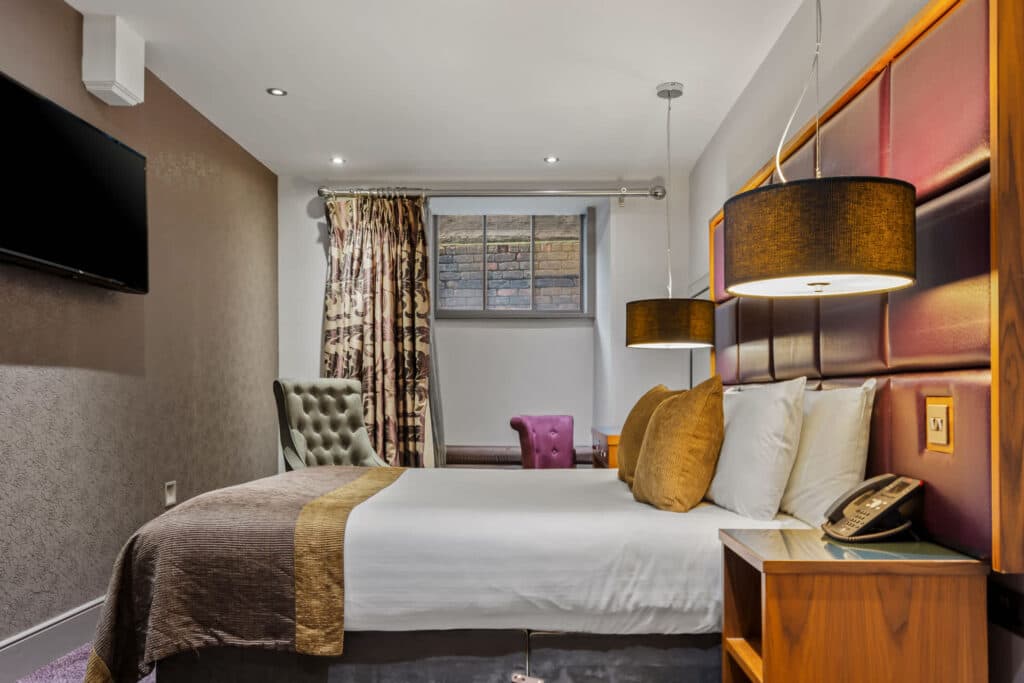
A residence is a hall of residence or a university campus: a study bedroom, often en suite, meals in a dining hall, and a hundred other students from a dozen countries in the same building. Our New York course uses a university campus in Queens; several UK courses use halls out of term.
What a residence gives a student is independence and a peer group. Fifteen- and sixteen-year-olds who would find a family's routine constraining tend to prefer it. It is also the better answer for a student with a specific dietary or medical need that is simpler to manage in a catered dining hall than in somebody's kitchen.
What it gives less of is English. A residence is full of teenagers who are all learning it, and the language of the common room drifts towards whatever the largest national group speaks. Good residences manage this deliberately; none eliminates it.
How it is checked. Residences have their own staff on site overnight, and our staff are resident with the group. Access is controlled, sign-in and sign-out are recorded, and the site is enclosed.
The questions that actually decide it
Not "which is better", but these:
- Has your child stayed away from home before? If not, a family is usually gentler. There is an adult noticing whether they have eaten.
- Is the goal spoken English, or the experience? If it is the English, choose the family. The difference over a fortnight is visible.
- Is your child sociable in a crowd or in a small group? A residence rewards the first; a family suits the second.
- How old are they? Under thirteen, we recommend a family almost without exception. Over sixteen, most students prefer a residence and get more out of it.
- Do they need a routine? A family provides one whether the student wants it or not. That is sometimes exactly the point.
- Is there a dietary or medical requirement? Tell us before you choose. Both can accommodate most things, but not equally easily, and we would rather match you than reassure you.
What we will not tell you
We will not tell you which family your child is with until the pre-arrival window. That is deliberate and it is a safeguarding rule rather than an administrative one: the household's address goes out in the pre-arrival pack, and the telephone number a parent needs during the trip is the school's twenty-four-hour line, not the host's. If you need to reach your child, you reach us, and we reach them — in minutes, at any hour.
We will also not tell you that one option is universally better, because we place several hundred students a year and it plainly is not.
Changing your mind
You can change your accommodation choice up to the point where we place the student — in practice, a few weeks before arrival. Ask, and if the change is possible on your dates we will make it. If it is not, we will say so rather than accept the booking and hope.
What to do next
Read the accommodation section on the course you are considering: each page names the actual arrangement for that date, not a general policy. The Newcastle Gold course is host family; the New York course is a university residence. Then tell us about your child on the contact page — age, whether they have been away before, how they are in a crowd — and we will tell you which we would choose, and why.
Everything else about the shape of the fortnight is in what is a study holiday, and the supervision question is answered hour by hour in how supervised is a study holiday.