Destinations
Toronto for a student: North America, at a calmer speed
A city where half the population was born somewhere else — which sounds as though it would dilute the English and does exactly the opposite.
Roseworth International School
· 5 min read
On this page — 7 sections
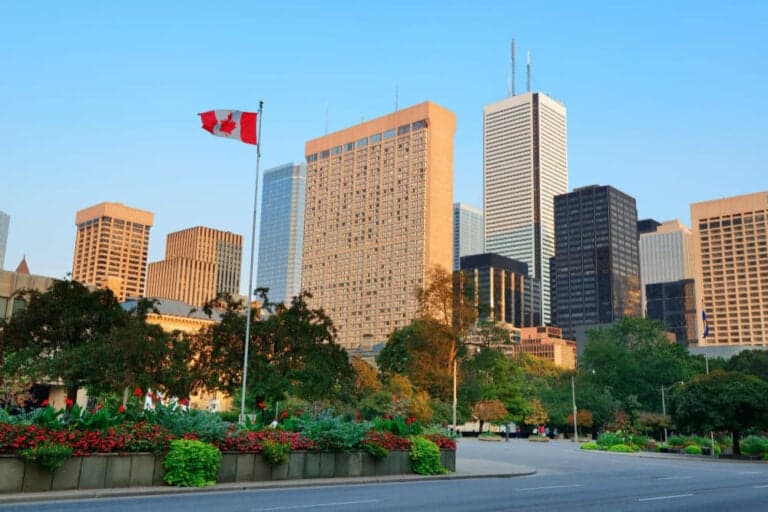
Toronto is the destination for a family who want North America without New York's intensity — three weeks in one of the most genuinely multicultural cities on earth, where about half the population was born in another country.
What kind of city it is
Canada's largest city, about three million people in the city proper and six in the wider area, on the north shore of Lake Ontario. Clean, orderly, safe by the standards of any large city, and organised on a grid that makes it very hard to be genuinely lost. The transit system is good and students learn it in three days.
The thing that makes it unusual for a language student: more than half of Torontonians speak a language other than English at home, and over two hundred languages are spoken across the city. That sounds as though it would dilute the English — in practice it does the opposite. Everybody's second language is English, so English is what strangers use with each other, spoken clearly because so many people are speaking it as a second language themselves. For a nervous student that is a considerably easier environment than a city where everyone is a native speaker talking fast.
The English
Canadian English sits between British and American. Spelling is mostly British — colour, centre, travelled — while vocabulary is mostly American: sidewalk, elevator, apartment, vacation. Pronunciation is close to American with a few distinctive vowels.
Two honest notes. It is a clear, moderate accent and one of the easiest of our destinations to listen to. And a student sitting a British examination will find the vocabulary slightly off-target, though far less so than in New York — the spelling at least is the one they are being marked on.
The Canadian habits students notice: sorry even more than in Britain, washroom for the toilet, eh? at the end of a sentence, and a level of everyday politeness that is not a stereotype.
What three weeks covers
Downtown and the CN Tower.553 metres, with a glass floor and a view over the whole lake. Done early, because everything else is oriented from it.
Kensington Market and Chinatown. Adjacent, and the best afternoon in the city — a Victorian neighbourhood turned into a jumble of food stalls, record shops and vintage clothes, next to one of North America's largest Chinatowns. This is where the multicultural claim stops being a statistic.
The Royal Ontario Museum and the Art Gallery of Ontario. The first is a crystalline structure crashed into a heritage building; the second holds the largest collection of Canadian art anywhere. Either fills an afternoon.
The Toronto Islands. A short ferry across the harbour to car-free islands with beaches and the best view of the skyline. The afternoon that turns a group into a group.
Casa Loma. A genuine Gothic Revival castle, built by a businessman in 1914, complete with secret passages. Students enjoy this far more than they expect to.
Niagara Falls, on a full-day excursion — and the Canadian side is the good side, which is the whole argument for seeing it from here. Ninety minutes each way.
Ottawa or Montreal, on the longer excursion: the capital, or a genuinely French-speaking city five hours east. For a student learning two languages, Montreal is a remarkable day.
Algonquin or the Niagara wine country, depending on the week and the weather — lakes and forest, or an escarpment of vineyards.
Where students stay
Host families, across the suburbs, on the transit network. Toronto host families are frequently first- or second-generation immigrant households, which means two useful things: they remember arriving somewhere and not speaking the language, and English is the household's shared language rather than an interruption to it.
How families are chosen and checked is in host family or student residence, and what is verified on every adult is in how do I know my child is safe.
Who Toronto suits
A student who wants North America but not New York. Same continent, considerably calmer, and a family placement rather than a residence — which usually means more spoken English per day. New York is the comparison to read.
A student whose confidence is the issue. A city where most people are speaking English as a second language is a gentler place to make mistakes.
A family thinking about Canadian universities. Three weeks in Toronto answers a question no prospectus can.
A student who is curious about the world. Two hundred languages in one city is an education by itself.
Who it suits less: a student who needs British English precisely for an examination — Peterborough or Newcastle for that — and a student for whom three weeks and a long flight would be a first attempt at being away.
The practical points
- Canada requires an eTA or a visa, depending on nationality, and it is separate from anything American or British. Start it early.
- A US visa does not cover Canada, and the reverse is also true. If a trip touches both, that is two permissions.
- Currency is the Canadian dollar, not the US one.
- Plugs are the North American type, so a UK adapter will not fit.
- Summer is warm and humid — high twenties, occasional thunderstorms. Not the cold Canada of the imagination.
The course
The Toronto Study Holiday runs three weeks, with English lessons in the morning and the city, or a full day away, in the afternoon. Dates and the real day-by-day itinerary are on its page, and the city is described on the Toronto destination page.
Tell us your child's age, their nationality and the weeks you have free on the contact page. Which weeks matter more than families expect — which weeks and how early to book explains why.