Destinations
Dublin for a student: a small capital that talks back
English in an English-speaking country that is not England — plus the thing about the accent nobody warns you about, and why nationality matters more here.
Roseworth International School
· 5 min read
On this page — 7 sections
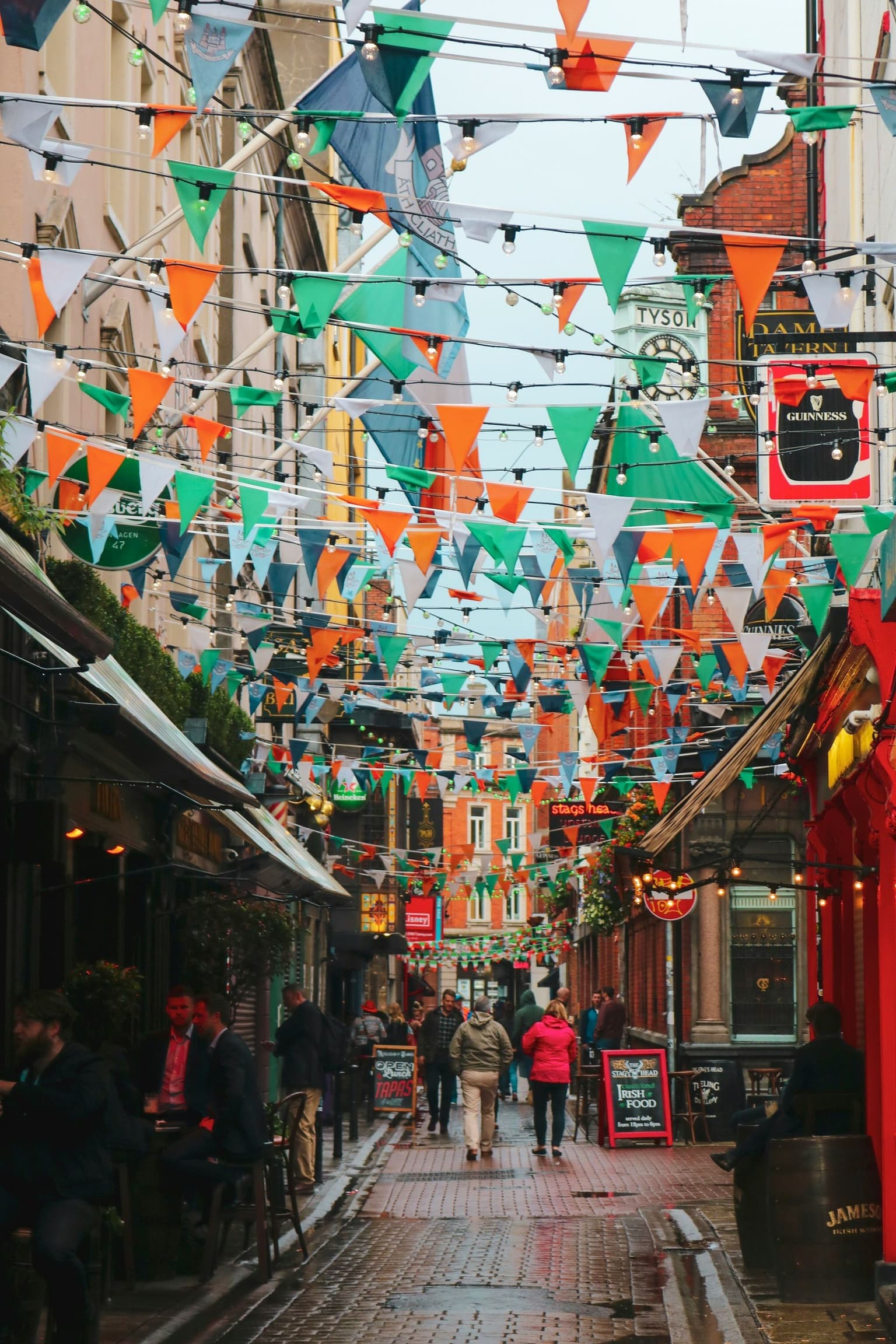
Dublin is the destination families choose when they want English in an English-speaking country that is not England — and there are good reasons for that, along with one thing about the accent nobody warns you about.
What kind of city it is
Small for a capital: about a million and a quarter people, and the centre walkable in half an hour. The River Liffey runs through the middle with the old city on the south side and O'Connell Street on the north. Georgian squares, a very old university, and more bookshops per street than anywhere else on this list.
What that means for a student: the same advantage Newcastle has. Big enough to be a real city, small enough that being lost is a ten-minute problem. And Dubliners talk to strangers as a matter of course, which is the single most useful feature a city can have for somebody learning to speak.
The accent, honestly
Dublin English is fast. Not strongly accented in the way Newcastle or Glasgow are, but quick, with the ends of sentences rising in a way that makes a question out of something that was not one. Students find the first two days harder than they expect and then adjust.
What is genuinely different: some vocabulary. A press is a cupboard. Grand means fine — "how are you?" "grand" — and does not mean grand. Craic (pronounced "crack") means good company and conversation, and a student who learns that word will hear it forty times a fortnight. None of it is a problem; all of it is worth mentioning before arrival.
What a week does
Trinity College and the Book of Kells. The university was founded in 1592 and the Long Room library is the most photographed room in Ireland for good reason — two hundred thousand old books on two floors of dark oak. The Book of Kells itself is a ninth-century illuminated gospel and it is genuinely extraordinary up close, though a student should be told in advance that they will see two open pages rather than the whole thing.
Kilmainham Gaol. The prison where the leaders of the 1916 Rising were executed, and the place where modern Irish history stops being dates. It is a hard visit in the right way, and it is the one our students talk about afterwards.
The National Museum and the National Gallery. Both free. The museum has the bog bodies — Iron Age men preserved in peat, with their hair still in place — which a fourteen-year-old will remember for the rest of their life.
Howth or Dún Laoghaire. Twenty-five minutes on the DART along the coast to a fishing village with a cliff walk and seals in the harbour. This is the afternoon that turns a group of strangers into a group.
Glendalough, on the full-day excursion. A sixth-century monastic settlement in a glacial valley in the Wicklow Mountains, an hour south. A round tower, two lakes, and the kind of landscape that explains why people wrote poems about this island.
The Cliffs of Moher, on the longer courses. A long day — three hours each way — and worth every minute of it.
Where students stay
Host families, in the suburbs a bus ride from the centre. Irish host families have a reputation in this industry for feeding students more than they can eat and talking to them constantly, and in our experience it is deserved. For a student whose spoken English is the reason for the trip, Dublin is one of the strongest placements we have.
How families are chosen and checked is in host family or student residence.
The practical differences from a UK trip
These matter and they are easy to miss:
- Ireland is in the European Union; the UK is not. An EU student needs no visa and no ETA for Ireland — a national identity card is enough. That makes Dublin considerably simpler than Newcastle for a Spanish, Italian or German family.
- A non-EU student needs a different permission from the UK one. Ireland has its own short-stay arrangements, and a UK visa does not cover Ireland. Tell us the nationality early — see do we need a visa for a short English course for the shape of the question, though the specifics there are the UK ones.
- The currency is the euro, not sterling. A student travelling on from a UK course needs both.
- Plugs are the same three-pin type as the UK. One adapter covers both.
Who Dublin suits
An EU family, for whom the paperwork is a national ID card and nothing else.
A student who wants to talk. Of everywhere we run, Dublin is the city where a fifteen-year-old will have the most unplanned conversations.
A student interested in history or writing. Four Nobel laureates in literature came out of this city, and it wears that lightly rather than solemnly.
Who it suits less: a student whose listening is very weak, because the pace is quick — Peterborough is gentler for a first attempt. And a family who specifically want England, for whom Newcastle is the equivalent city.
The course
The Dublin study holiday runs at two and three weeks, with English lessons in the morning, the city in the afternoon and one full-day excursion each week. Dates and the real day-by-day itinerary are on its page, and the city itself is described on the Dublin destination page.
Tell us your child's age, their nationality and the weeks you have free on the contact page. Nationality matters more for Dublin than for anywhere else we run, and it is the first thing we will check.