Learning English
How much English does my child need before they come?
What the placement test is for, what happens on the first morning, and why arriving as a beginner is not the problem parents expect it to be.
Roseworth International School
· 4 min read
On this page — 6 sections
Almost none, and that is not a sales answer.
The worry behind this question is usually not really about grammar. It is: will my child sit in a classroom for four hours understanding nothing, be embarrassed, and come home having hated it. That is a reasonable fear and it is worth answering properly, because the way a school handles the first morning is what decides it.
The first morning is not a lesson
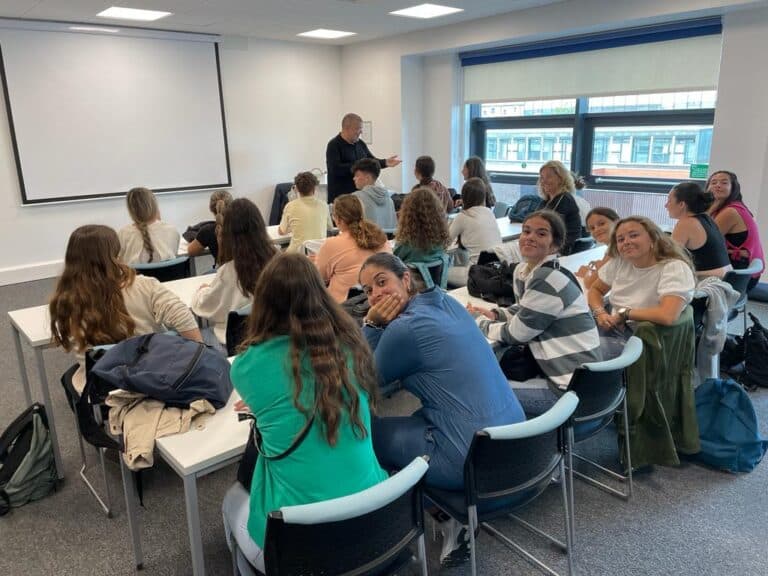
Every student sits a short placement test before they are put in a class. It takes about forty minutes: a written part that gets harder as it goes, and a few minutes of conversation with a teacher. There is nothing to revise for and nothing to pass. Its only purpose is to answer one question — which group will this student be able to work in without either drowning or being bored.
By late morning, students are in that group. This matters more at fourteen than at any other age, because nobody that age wants to be the one who cannot follow, and nobody wants to be the one waiting for everyone else. Both are avoidable, and the test is how.
Levels follow the Common European Framework — A1 through to C1 — and we group by level rather than by age or nationality. A twelve-year-old and a sixteen-year-old at B1 will sometimes be in the same room. That is deliberate: the language is what the class has in common.
A true beginner
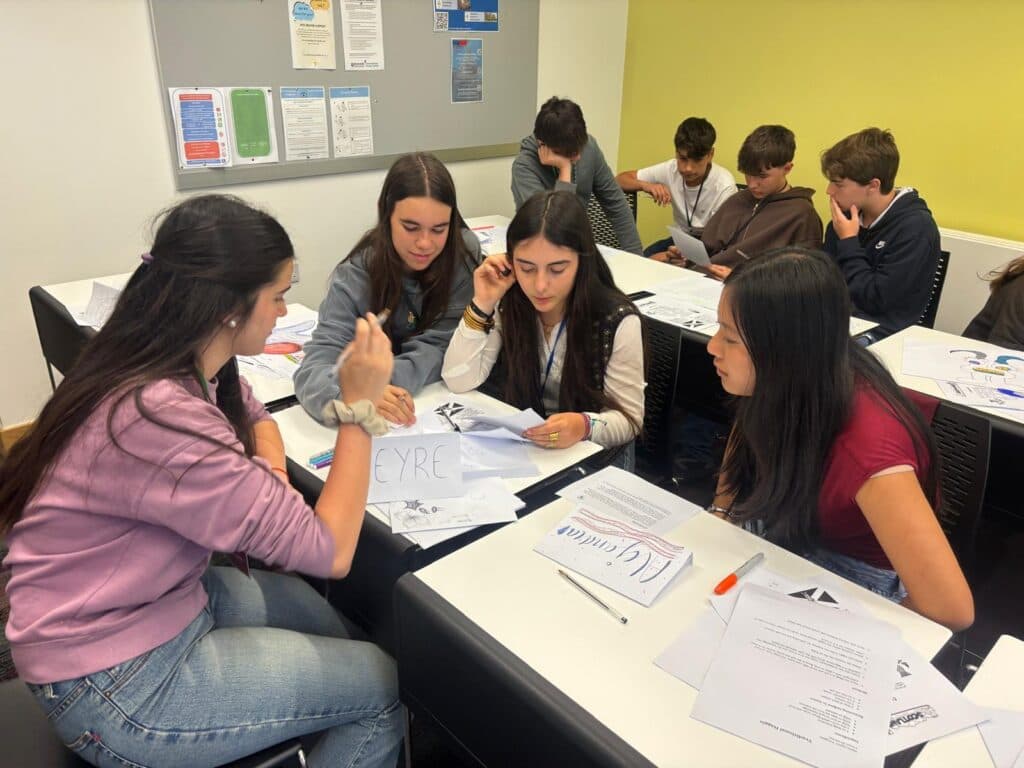
An A1 student — someone who can introduce themselves and not much more — is not a problem to be managed. They are the reason the placement test exists. What they need is a class of people at the same point, a teacher who is not going to switch to their first language, and a fortnight of having to ask for things in shops. All three are exactly what a study holiday is.
The one qualification: for a genuine beginner under about twelve, we usually recommend a host family rather than a residence. A family gives an hour of unavoidable, patient English every evening, and that is the single most effective thing available to a young beginner.
What actually changes in a fortnight
Not a level, usually. Two weeks is rarely enough to move a student from B1 to B2 on paper, and we would not claim otherwise.
What changes is the thing between knowing English and using it. Students arrive translating in their head before they speak, and leave answering. They stop rehearsing sentences. They start guessing at words they do not know instead of stopping. Parents describe the difference as confidence, which is right, but it is more specific than that: it is the loss of the pause.
Four weeks does move levels for many students. That is why our longer courses exist and why the four-week option is worth considering if the goal is measurable progress rather than the experience.
If the goal is an examination
Then a study holiday is the wrong instrument, and this is the point at which we tell families so.
A fortnight with excursions in the afternoon cannot deliver an IELTS band or a school entrance result. What can is a longer, denser course with examination practice in it — our general English course is built for that, over more weeks, with the afternoons spent differently.
If you have a specific target and a deadline, say so when you enquire. It changes what we recommend, and there is no version of this where selling you the wrong course helps us.
Small things that help before they come
None of these is homework, and a student who does none of them will be fine.
- Watch things in English with English subtitles rather than subtitles in their own language. The gap between those two habits is surprisingly large.
- Learn thirty words about themselves — their town, their family, their sport, their favourite food. The first three days of any course are the same conversation twenty times, and having it ready is the difference between joining in and standing at the edge.
- Learn how to ask for help. "Sorry, could you say that again?" and "How do you say…?" are worth more in the first week than any tense.
- Do not cram grammar. It will not be what stops them, and arriving tired will be.
What we ask from you
An honest estimate of the level, and anything relevant we would not otherwise know: a diagnosed learning difference, a hearing difficulty, an anxiety about speaking in front of a group. Every one of those changes how a teacher runs a first lesson, and none of them is a reason to be turned away. What causes problems is finding out in week two.
Tell us on the contact page — the student's age, roughly where their English is, and what you are hoping the fortnight does. We will tell you which course fits, and if none of them does, we will say that instead.
If you are still working out the shape of the trip, what is a study holiday sets out the day, and study holiday, summer camp, or language course explains why those three words are not interchangeable.